

OpenGeofiction:West Uletha
 NOTE: This page is currently under construction. Some info is prone to changes and mistakes may be present! NOTE: This page is currently under construction. Some info is prone to changes and mistakes may be present! 
|
|
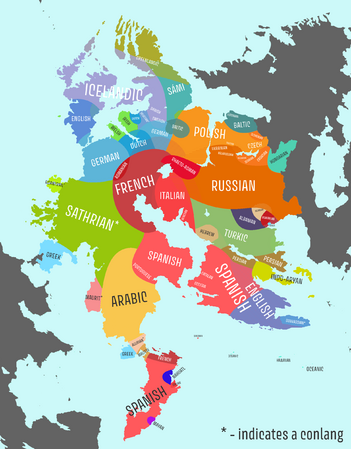
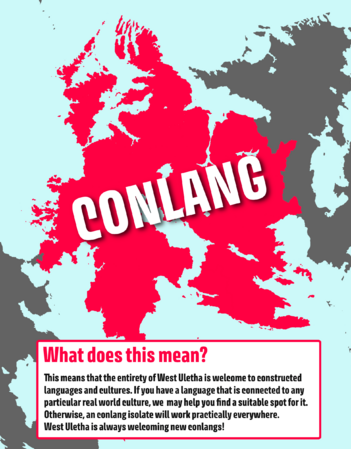
West Uletha is the western half of the largest continent on OGF - Uletha. The eastern half is East Uletha. With great size comes great diversity in geography, culture, climate, geology, history, etc. West Uletha is imagined as the home of most European cultures including English, French, German, Italian, Polish, Portuguese, Russian, Spanish and many more. Along with those, it features certain non-European cultures including those from the Middle East, Southern Asia, Central America and the rest of the world. It is worth mentioning that West Uletha is NOT supposed to be a 1:1 copy of Europe and was and will never be imagined as such, however there are certain similarities between the two areas. The subcontinent is coordinated and managed by administrators Bixelkoven and Alessa.
 |
Loading map... |
Geography and climate
- Geography of West Uletha
-
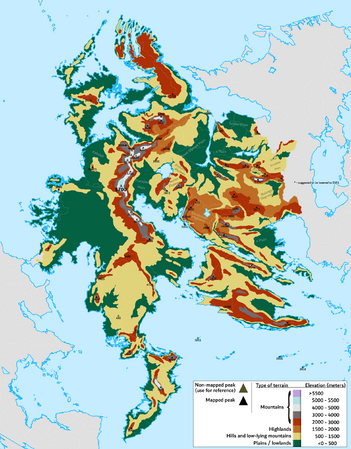 Rough elevation and terrain map
 -
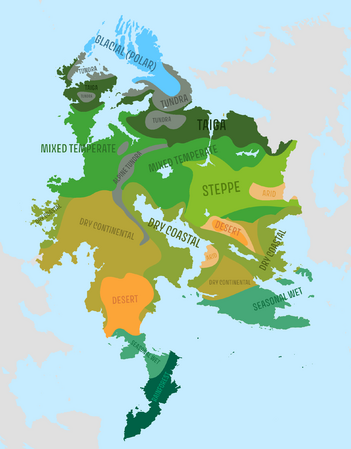 Biomes map
 -
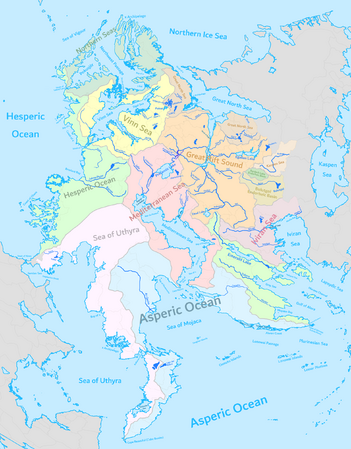 Major rivers and drainage basins map
 -
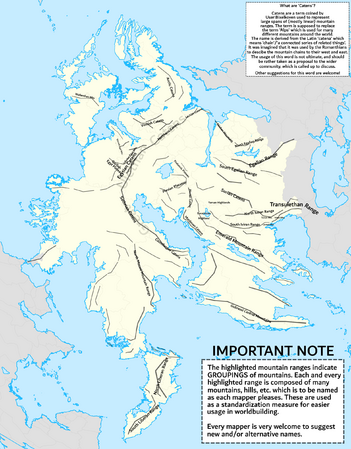 Mountain ranges map


The geography of West Uletha is
Cultures and languages
- Cultures of West Uletha
-
-


Regions
- Regions of West Uletha
-
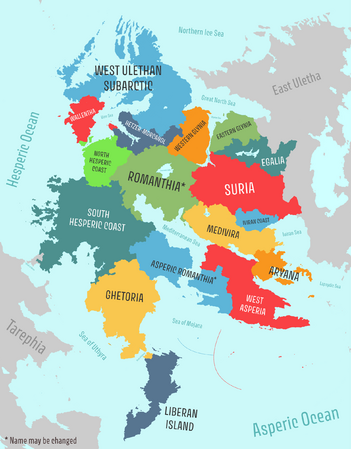

West Uletha is split into 17 sectors, numbered from 1-17, which designate areas with cultural similarities. These can be identified in the first two digits of West Ulethan territory codes (for example: UL17x is a territory in sector 17, the Iviran Coast region).
(Names in italic are proposed to be changed.)
South Hesperic Coast (01)
The South Hesperic Coast region is located in the southwestern part of the continent. It is composed of 4 territories, the largest of which is Sathria∈⊾ covering over 80% of the region. It is home to Roantra∈⊾, the first territory on OpenGeofiction.

|
Landscape The landscape is dominated by vast dry grassy plains and rugged rocky coasts. The region features a short coastline along the Mediterranean Sea, separated from the rest of the area by tall mountains. |

|
Climate The region is characterized by a drier climate, resembling that of the Maghreb region in Africa along the coast, and Anatolia in the continental areas. The southern part is particularly arid, while the northern parts near the North Hesperic Coast region are more temperate and less dry. |
| Error creating thumbnail: File:HSA.png |
Culture & language Dominated by the Sathrian culture (conlang). Also features Roantran (conlang) and Greek. |


| File:HSHistory.svg | History The history of this region is largely undefined. |

| File:Flag of Greece.svg | Homelands This region is the homeland of Hellanesian culture, which is based on Greek culture. |

Ghetoria (02)
Located in the southwest of the continent, this region is characterized by dry, desert-like landscapes and a diverse cultural collage. It comprises ten territories, the largest of which is Mazan∈⊾.
|
|
Landscape Deserts predominate the interior landscape and extend to certain minor coastal areas. The remaining coastal regions are primarily of Mediterranean terrain, characterized by bushes and shrubs. Closer to the equator, the environment transitions to lush, dense forests with a more dynamic and rich wildlife. |
|
|
Climate The northern part of the region is one of the driest areas in West Uletha, with minimal rainfall. The entire region experiences warm temperatures, among the highest in West Uletha. In the south, a seasonal wet climate prevails, resulting in more frequent rainfall that enriches the vegetation. |
| Error creating thumbnail: File:HSA.png |
Culture & language Dominated by the Arabic culture and language(conlang), together with Greek, Maltese and Maurit (conlang) areas. |
| File:HSHistory.svg | History The history of this region is largely undefined. The Strait of Kalkara and its surroundings were highly contested, with various states establishing settlements along its coast to exert control. This region also features Hellanesian colonies and areas of influence. |
| File:Flag of Malta.svg File:Flag of the Arab League.svg 
|
Homelands This region is the homeland of the Kalkaran and Mazanic cultures, which are influenced by Maltese and Arabic cultures, respectively. This region is the homeland of the Maurit culture. |


Liberan Island (03)
This region represents the southernmost territories in West Uletha, distinguished as the sole area extending south of the Equator. Comprising 13 territories, it bears a predominantly colonial heritage.
|
|
Landscape The landscape is characterized by dense jungle forests, offering a balanced combination of mountains and lowlands reminiscent of the Caribbean and certain regions of Mexico. |
|
|
Climate The climate predominantly aligns with rainforest conditions, with portions in the north experiencing a seasonal wet climate as they distance themselves from the equator. Often subjected to monsoons, this region is reputedly one of the wettest in West Uletha, while maintaining consistently high temperatures. |
| Error creating thumbnail: File:HSA.png |
Culture & language Culturally, Spanish influence holds sway, although vestiges of French, Italian, Nahuatl, and Mayan cultures can be found, owing to historical colonial ties. The indigenous peoples of this area remain unidentified, with much of the culture rooted in colonial heritage. |
| File:HSHistory.svg | History The historical narrative of this region is largely shaped by its colonial past, with Valony and Plevia establishing colonies alongside Castellanese dominance. |
| File:Flag of the Mayan People.svg | Homelands This region possesses no homelands of any culture, however it does feature Mayan culture. |

Asperic Romanthia (04)
Situated as the southern extension of the expansive Romantish sphere of influence, this region borders the Asperic Ocean to its south, divided into western and eastern sectors by the Strait of Vela. Comprising seven territories, it stands as a nexus for some of the world's most influential cultures, notably including the Spanish homeland.
|
|
Landscape The landscape presents a predominantly Mediterranean and arid character, characterized by shrublands, sparse forests, and intermittent rivers. In the western sector, terrain varies between lowlands, predominantly flat highlands, and rugged mountains forming part of the expansive Great Ulethan mountain chain. Conversely, the eastern reaches are predominantly mountainous, marked by multiple ranges traversing the area. |
|
|
Climate In terms of climate, the region experiences a Mediterranean and arid coastal climate, marked by high temperatures tempered by occasional drops in winter, owing to the elevated topography in certain locales. Rainfall is relatively scarce, contributing to the region's distinction as one of the sunniest in West Uletha. |
| Error creating thumbnail: File:HSA.png |
Culture & language Culturally, the area is overwhelmingly characterized by Latin influence. Spanish culture predominates in the western sector, alongside Portuguese and a Spanish-based constructed language. Meanwhile, the eastern region boasts a blend of Catalan, Occitan, and Spanish cultures, with a minor presence of Arabic influence. |
| File:HSHistory.svg | History Regarding its historical narrative, the region's past remains shrouded in mystery. It is widely speculated that much of the territory was under the dominion of the Romantish Empire. The strait area, historically a bustling maritime thoroughfare, has been subject to various conquests and conflicts throughout its history. |
| File:Flag of Spain.svg File:Flag of Portugal.svg File:Flag of Catalonia.svg File:Flag of Occitania.svg |
Homelands This region is home of the Castellanese (Spanish), Florescentian (Portuguese), Larcetan (Catalan) and Lustrian (Occitan) states. |


West Asperia (05)
|
|
Landscape |
|
|
Climate |
| Error creating thumbnail: File:HSA.png |
Culture & language |
| File:HSHistory.svg | History |
 
|
Homelands This region is home of the Gobrasi and Khaiwoonese, fictional cultures native to the region, alongside various other tribal cultures. |
Aryana (06)
|
|
Landscape |
|
|
Climate |
| Error creating thumbnail: File:HSA.png |
Culture & language |
| File:HSHistory.svg | History |
| File:Flag of Iran.svg File:Flag of India.svg |
Homelands This region is home to the Aryan (Persian) and Hindi (broadly)(currently unnamed) cultures. |


Mediviria (07)
|
|
Landscape |
|
|
Climate |
| Error creating thumbnail: File:HSA.png |
Culture & language |
| File:HSHistory.svg | History |
| File:Flag of the Organization of Turkic States.svg File:Flag of Turkey.svg File:Flag of Uzbekistan.svg File:Flag of Israel.svg |
Homelands This region is home of the Turkic cultures, including but not limited to Turquese (Turkish), Yughut* (Uzbek) and Naphonan(?) (Hebrew). |


* - ''Yughut (Uzbek) is noted on the Index:Languages wiki page, but is not present in any territory as a dominant culture.
Romanthia (08)
|
|
Landscape |
|
|
Climate |
| Error creating thumbnail: File:HSA.png |
Culture & language |
| File:HSHistory.svg | History |
| File:Flag of Vatican City.svg Error creating thumbnail: File:Flag of Italy.svg File:Flag of Raetia.svg File:Flag of Venice.svg |
Homelands This region is home of the Romantish (Latin) cultural group and some of its subgroups, including Valonian (French), Plevian (Italian), Rhaeto-Roman, Navennan (Venetian), alongside various other cultural groups. |


North Hesperic Coast (09)
|
|
Landscape |
|
|
Climate |
| Error creating thumbnail: File:HSA.png |
Culture & language |
| File:HSHistory.svg | History |
| File:Flag of Germany.svg | Homelands This region is home of the Kalmish (German) culture. |

Wallentha (10)
|
|
Landscape |
|
|
Climate |
| Error creating thumbnail: File:HSA.png |
Culture & language |
| File:HSHistory.svg | History |
| File:Flag of England.svg | Homelands This region is home of the Ingerish* (English) culture. |

* - Name is undergoing potential change
Hetzer-Morcanol (11)
|
|
Landscape |
|
|
Climate |
| Error creating thumbnail: File:HSA.png |
Culture & language |
| File:HSHistory.svg | History |
| File:Combined flag of the Celtic nations.svgFile:Flag of Wales.svg File:Flag of Ireland.svg File:Flag of Netherlands.svg |
Homelands This region is home of the Celtic language group including Cambric (Welsh) and Irish. Alongside those, the Lentian (Dutch) culture calls this region home. |


West Ulethan Subarctic (12)
|
|
Landscape |
|
|
Climate |
| Error creating thumbnail: File:HSA.png |
Culture & language |
| File:HSHistory.svg | History |
| File:Flag of Greenland.svg File:Sami flag.svg File:Flag of Iceland.svg File:Flag of Denmark.svg File:Flag of Sweden.svg File:Flag of Finland.svg |
Homelands This region is home of the Greenlandic, Gaskúšillimigiella (Pitä/Arjeplog Sámi), Jiemiesillimigiella (Northern Sámi), Norlensk (Icelandic), Danish and Svennish* (Swedish) cultures, alongside numerous other smaller groups. It also features the Finnish culture. |


* - ''Svennish (Swedish) is originates in this region, but is not the dominant culture in any territory.
Western Glynia (13)
|
|
Landscape |
|
|
Climate |
| Error creating thumbnail: File:HSA.png |
Culture & language |
| File:HSHistory.svg | History |
| File:Flag of Poland.svg | Homelands This region is home of the Lechian (Polish) culture. |

Eastern Glynia (14)
|
|
Landscape |
|
|
Climate |
| Error creating thumbnail: File:HSA.png |
Culture & language |
| File:HSHistory.svg | History |
| File:Flag of Estonia.svg File:Flag of Ukraine.svg File:Flag of Silesia.svg File:Finno-Ugric language.gif |
Homelands This region is home of the Saave (Estonian), (Dregolesian) Ukrainian, and Silesian cultures, as well as being partly the origin of the Baltic and Uralic groups. |


Egalia (15)
|
|
Landscape |
|
|
Climate |
| Error creating thumbnail: File:HSA.png |
Culture & language |
| File:HSHistory.svg | History |
| File:Flag of Serbia.svg File:Flag of Croatia.svg File:Flag of Czechia.svg File:Flag of Slovenia.svg File:Flag of North Macedonia.svg File:Flag of Belarus (1918, 1991–1995).svg File:Flag of Hungary.svg File:Kraljevina Jugoslavija (16–9).svg |
Homelands This region is home of numerous Slavic languages and cultures, including Livnian (Serbian), Mallyorian (Croatian), Drabantian (Czech), Beldonian (Slovene), Macedonian, Dregovinian (based on Belarusian), Podolian (Slavic conlang). Alongside that, it is also the homeland of Hungarian. It is potentially the homeland of the Slavic cultural group. |


.svg)

.svg)
Suria (16)
|
|
Landscape |
|
|
Climate |
| Error creating thumbnail: File:HSA.png |
Culture & language |
| File:HSHistory.svg | History |
| File:Flag of Russia.svg File:Flag of Georgia.svg File:Kraljevina Jugoslavija (16–9).svg |
Homelands This region is home of the Surian (Russian) culture. Likewise, it is partially the homeland of the Kartvelian (Georgian) culture. It is potentially the homeland of the Slavic cultural group. |


Iviran Coast (17)
|
|
Landscape |
|
|
Climate |
| Error creating thumbnail: File:HSA.png |
Culture & language |
| File:HSHistory.svg | History |
| File:Flag of Albania.svg File:Flag of Romania.svg  File:Flag of Georgia.svg |
Homelands This region is home of the Albanian culture, as well as numerous conlang cultures such as Iviran. It is partially home to the Kartvelian (Georgian) culture. |

